
What Men Over 50 in Richfield Need to Know
By Dr. Kyle Kingsley, MD
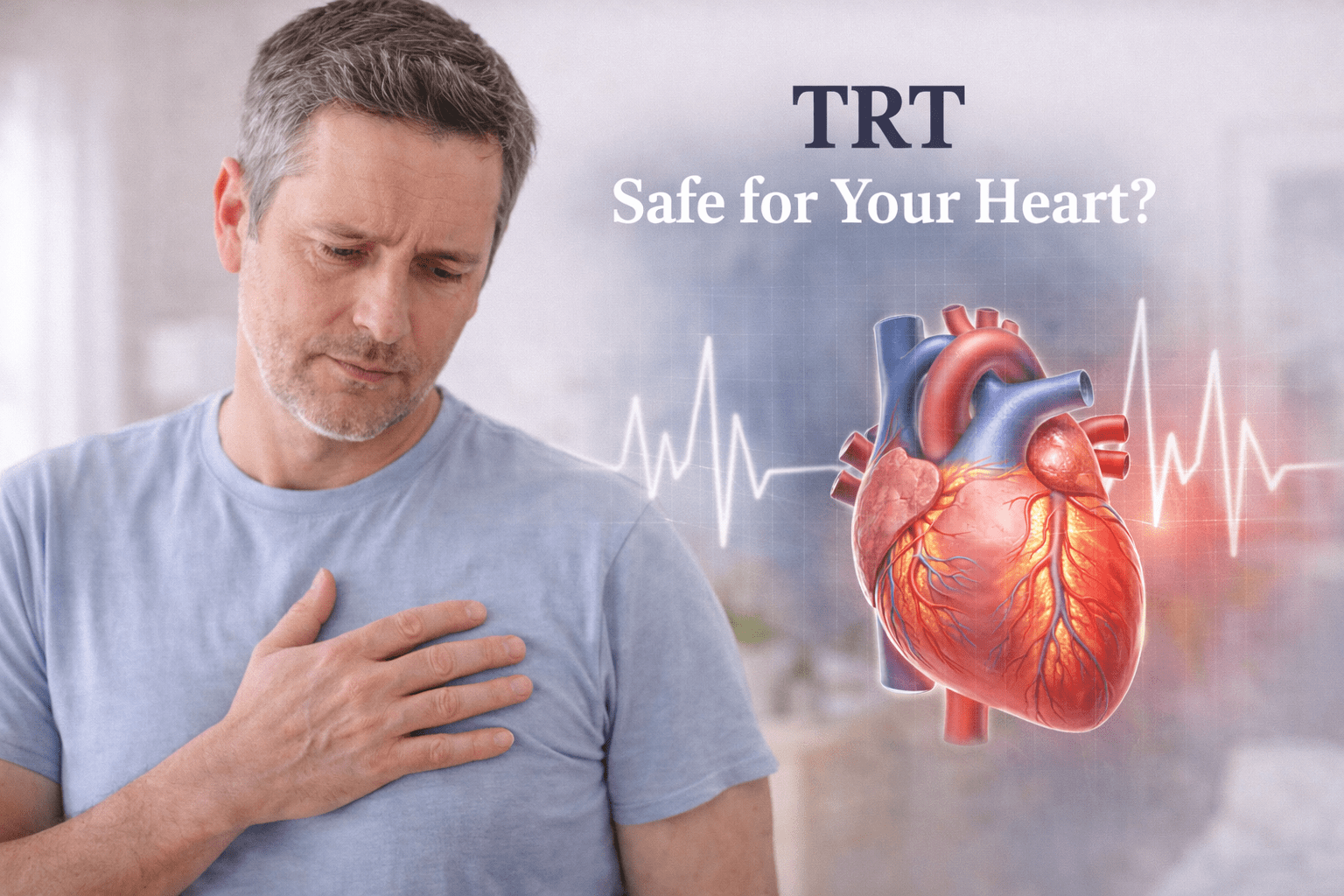
Testosterone replacement therapy (TRT) has become increasingly common among men over 50, yet concerns about heart health continue to surface—often driven by outdated studies, headlines taken out of context, or misinformation online.
Men in Richfield frequently ask a direct and reasonable question:
“If I start TRT, am I putting my heart at risk?”
The short answer is that cardiovascular risk depends far more on how testosterone is prescribed and monitored than on testosterone itself.
This article reviews the current science, clarifies where past fears came from, and explains how physician-led TRT can be approached safely for men in Richfield.
Why Testosterone Declines With Age
Testosterone levels naturally decline with age, typically beginning in the 30s and accelerating after 50.
Low testosterone in men is associated with:
-
Increased fat mass
-
Reduced muscle mass
-
Insulin resistance
-
Higher inflammatory markers
These changes themselves are cardiovascular risk factors, which is why the relationship between testosterone and heart health is more nuanced than “good” or “bad.”
Where the Heart-Risk Concerns Came From
Much of the fear around TRT and heart disease traces back to:
-
Older observational studies
-
Poorly designed trials
-
Use of supraphysiologic dosing
-
Inadequate patient screening
Some early studies included men who were:
-
Frail
-
Acutely ill
-
Given high doses without monitoring
These conditions do not reflect modern, physician-led TRT practice.
What More Recent Evidence Shows
More recent and higher-quality studies suggest a different picture.
The Endocrine Society notes that when testosterone is prescribed appropriately to men with clinically low levels, evidence does not support an increased risk of heart attack or stroke.
🔗 https://www.endocrine.org
In fact, restoring testosterone to physiologic levels may improve several cardiovascular risk markers, including:
-
Body composition
-
Insulin sensitivity
-
Lipid profiles
Low Testosterone Itself Is Linked to Cardiovascular Risk
Multiple studies have shown that men with untreated low testosterone are more likely to have:
-
Metabolic syndrome
-
Type 2 diabetes
-
Increased visceral fat
-
Higher all-cause mortality
This does not mean TRT is a heart medication—but it highlights that low testosterone is not a benign state.
Why Monitoring Matters More Than the Medication
The key determinant of safety is clinical oversight.
Cardiovascular risk increases when TRT is:
-
Over-dosed
-
Started without baseline evaluation
-
Continued without lab monitoring
Proper monitoring includes:
-
Hematocrit and hemoglobin
-
Lipids
-
Blood pressure
-
Symptom tracking
The American Heart Association recognizes the importance of addressing metabolic and hormonal contributors to cardiovascular risk rather than evaluating single variables in isolation.
🔗 https://www.heart.org
Who Should Be Cautious With TRT
TRT is not appropriate for every man.
Extra caution is warranted in men with:
-
Recent heart attack or stroke
-
Uncontrolled heart failure
-
Untreated sleep apnea
This is why physician-led evaluation—not online protocols—is essential.
Why Men Over 50 in Richfield Are Re-Evaluating TRT
Men in Richfield are increasingly informed and proactive.
Many arrive already knowing:
-
Their energy and strength have declined
-
Lifestyle changes alone haven’t helped
-
They want data-driven, conservative care
They are not seeking shortcuts—they are seeking clarity and safety.
How TRT Is Approached at Lite Medical
At Lite Medical, TRT is never started casually.
Care begins with the Premier Discovery Intake, which evaluates:
-
Symptoms and goals
-
Cardiovascular risk factors
-
Baseline labs
👉 https://litemedicalclinic.com/premier-discovery-intake/
Our approach emphasizes:
-
Physiologic dosing
-
Conservative titration
-
Ongoing cardiovascular monitoring
Men in Richfield are seen through our local clinic:
👉 https://litemedicalclinic.com/richfield-bloomington/
Men in nearby Edina and Minneapolis often ask similar questions about heart health and TRT, reflecting shared concerns across the south metro.
You can learn more about our men’s testosterone therapy services here:
👉 https://litemedicalclinic.com/testosterone-replacement-therapy/
And about our physician-led care philosophy here:
👉 https://litemedicalclinic.com/about/
Frequently Asked Questions
Does TRT increase heart attack risk?
When prescribed at physiologic doses and monitored appropriately, current evidence does not show increased cardiovascular risk.
Can TRT improve heart health?
TRT is not a heart treatment, but it may improve metabolic factors that influence cardiovascular risk.
Is TRT safe after age 50?
Yes, for appropriately selected men under physician supervision.
What labs are monitored for heart safety?
Hematocrit, lipids, blood pressure, and symptom trends are routinely monitored.
Should men with heart disease avoid TRT?
Not always, but careful evaluation and coordination of care are required.
Final Thoughts from Dr. Kingsley
The relationship between testosterone and heart health is complex—but it is not reckless or inherently dangerous when managed correctly.
For men over 50 in Richfield, physician-led TRT focused on physiologic dosing and cardiovascular monitoring can be a safe and thoughtful option when symptoms and labs support treatment.
Book a Consultation
If you’re considering TRT and want a physician-guided discussion of cardiovascular safety, you can book a consultation here:
👉 https://litemedicalclinic.com/contact/
Medical & Regulatory Disclaimer
This article is for educational purposes only and does not constitute medical advice. Testosterone therapy decisions are individualized and should be made in consultation with a qualified healthcare professional.
The US FDA urges caution around unapproved or compounded hormone formulations that may be unsafe.