
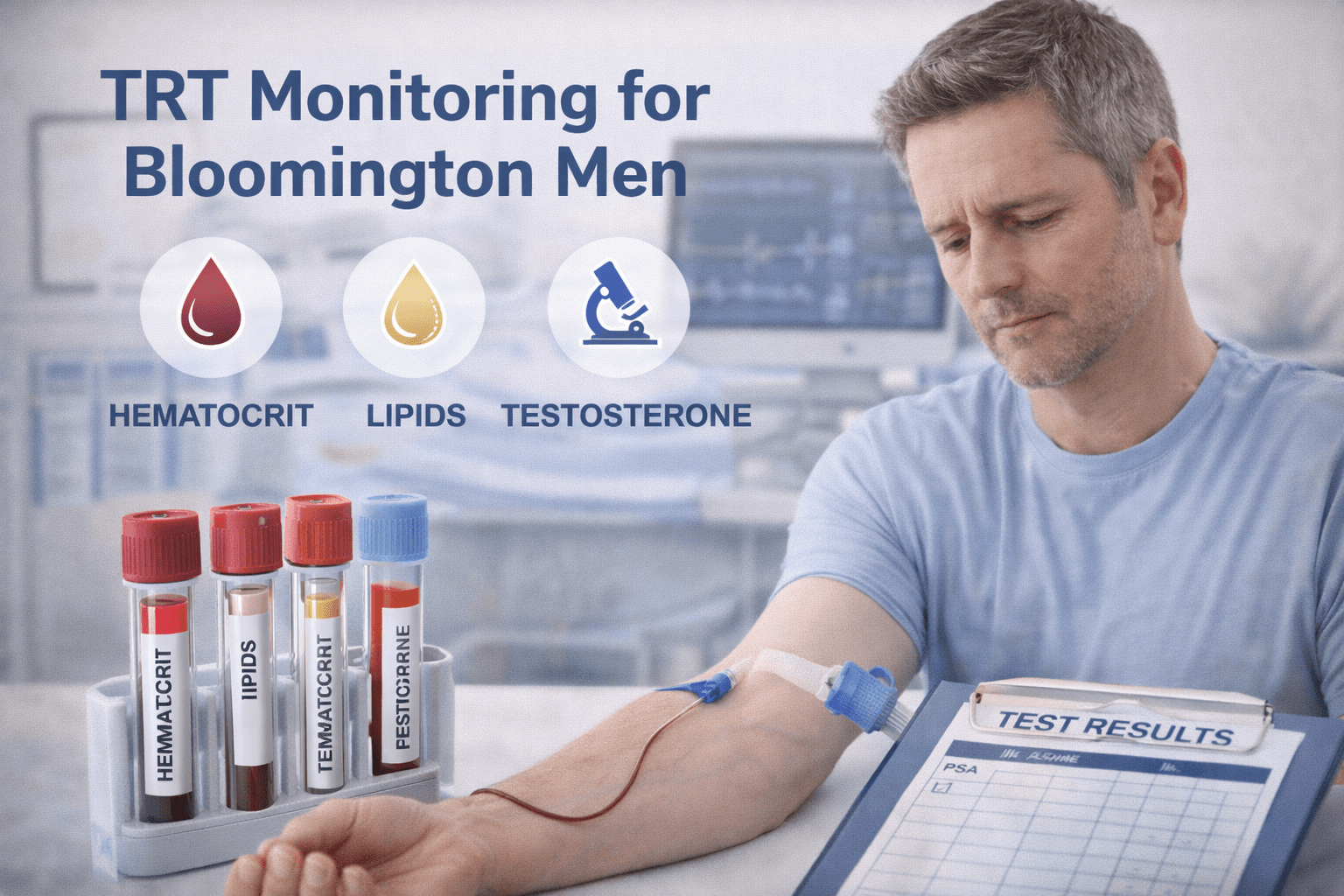
What Men in Bloomington Need to Know
By Dr. Kyle Kingsley, MD
Testosterone replacement therapy (TRT) is not a one-time prescription—it is an ongoing medical process that requires structured monitoring to remain safe and effective over time. For men in Bloomington considering TRT, understanding how therapy is followed and adjusted is just as important as understanding its potential benefits.
When TRT is managed correctly, long-term safety depends far more on appropriate lab monitoring and physician oversight than on testosterone itself.
This article outlines which labs matter most, how often they are checked, and what responsible long-term TRT care looks like for Bloomington men.
Why Monitoring Is Central to TRT Safety
Testosterone influences multiple physiologic systems, including:
-
Red blood cell production
-
Lipid metabolism
-
Blood pressure regulation
-
Prostate signaling
Because of this, TRT should never be treated as “set it and forget it.” Ongoing monitoring allows therapy to remain within physiologic ranges and helps identify issues early—before they become problems.
Baseline Testing Before Starting TRT
Before TRT is initiated, a comprehensive baseline evaluation is essential. This establishes safety parameters and provides a reference point for future decisions.
Typical baseline testing includes:
-
Total and free testosterone
-
Complete blood count (CBC)
-
Lipid panel
-
PSA (age-appropriate)
-
Blood pressure
-
Symptom and health history review
Starting TRT without baseline data removes the ability to evaluate safety over time.
Key Labs Monitored During TRT
Once therapy begins, several labs are followed at regular intervals.
Hematocrit and Hemoglobin
Testosterone stimulates red blood cell production. If levels rise too high, blood viscosity can increase.
Monitoring allows:
-
Dose adjustments
-
Timing changes
-
Early intervention if levels trend upward
Lipid Panel
Changes in body composition during TRT can influence cholesterol levels. Tracking lipids helps identify cardiovascular trends and guides lifestyle or therapy adjustments.
PSA and Prostate Health
Testosterone does not cause prostate cancer, but prostate health should still be monitored—particularly in aging men.
Baseline and trend monitoring help identify:
-
Benign prostate enlargement
-
Changes that warrant further evaluation
What Medical Guidelines Recommend
The Endocrine Society emphasizes that TRT safety depends on:
-
Proper patient selection
-
Routine laboratory monitoring
-
Adjusting doses to maintain physiologic levels
Similarly, the American Urological Association (AUA) recommends structured monitoring of testosterone levels, hematocrit, and prostate markers throughout therapy.
🔗 https://www.auanet.org
These recommendations form the foundation of modern, physician-led TRT care.
Why Dose Adjustments Are Normal
Many men assume TRT dosing should remain fixed once therapy begins. In reality, dose adjustments are common and appropriate.
Reasons doses may change include:
-
Weight loss or gain
-
Changes in activity level
-
Aging
-
Lab trends over time
Safe TRT is dynamic, not static.
Why Online TRT Models Often Fall Short
Men who experience complications on TRT often began therapy through:
-
Online clinics
-
Fixed-dose subscription models
-
Minimal lab oversight
These models frequently lack:
-
Individualized titration
-
Regular lab review
-
Long-term safety planning
Monitoring is not optional—it is foundational.
Why Bloomington Men Are Prioritizing Long-Term Care
Men in Bloomington increasingly understand that TRT is not about short-term results.
They are asking:
-
“Who is watching my labs?”
-
“Is this safe long-term?”
-
“Will my care evolve as my health changes?”
These are the right questions.
How TRT Monitoring Works at Lite Medical
At Lite Medical, TRT begins with the Premier Discovery Intake, which establishes a comprehensive baseline.
👉 https://litemedicalclinic.com/premier-discovery-intake/
Our monitoring approach emphasizes:
-
Regular lab review
-
Symptom-guided dose adjustments
-
Cardiovascular and prostate awareness
Men in Bloomington are seen through our local clinic:
👉 https://litemedicalclinic.com/richfield-bloomington/
Men in nearby Edina and Minneapolis follow similar monitoring standards, reflecting consistent physician-led care across the south metro.
You can learn more about our men’s testosterone therapy services here:
👉 https://litemedicalclinic.com/testosterone-replacement-therapy/
And about our physician-led care philosophy here:
👉 https://litemedicalclinic.com/about/
Frequently Asked Questions
How often are labs checked on TRT?
Typically every 3–6 months initially, then at regular intervals once stable.
What happens if my hematocrit rises?
Dose or timing adjustments usually correct elevations without stopping therapy.
Is PSA monitoring required?
Yes. Age-appropriate PSA monitoring is standard practice.
Can TRT be continued long-term?
Yes, when monitored appropriately and adjusted as needed.
What if I feel fine but labs change?
Labs guide proactive adjustments before symptoms or risks develop.
Final Thoughts from Dr. Kingsley
Testosterone therapy is safest when it is treated as long-term medical care, not a quick fix.
For men in Bloomington, structured monitoring, conservative dosing, and physician oversight are what allow TRT to remain both safe and effective over time.
Book a Consultation
If you’re considering TRT or want to ensure your therapy is being monitored appropriately, you can book a consultation here:
👉 https://litemedicalclinic.com/contact/
Medical & Regulatory Disclaimer
This article is for educational purposes only and does not constitute medical advice. Testosterone therapy decisions are individualized and should be made in consultation with a qualified healthcare professional.
The US FDA urges caution around unapproved or compounded hormone formulations that may be unsafe.