
A Timeline for Libido and Energy for Men in Eden Prairie
By Dr. Kyle Kingsley, MD
One of the most common questions men ask before starting testosterone replacement therapy (TRT) is simple: How long will it take before I notice a difference?
The honest answer is that TRT does not work overnight—and it shouldn’t. Testosterone affects multiple systems in the body, each responding on a different timeline. Understanding what changes typically occur—and when—helps men in Eden Prairie approach TRT with realistic expectations and a long-term mindset.
This article outlines what the medical literature shows about TRT timelines, how libido and energy typically change, and why physician-led monitoring matters throughout the process.
Why TRT Works Gradually
Testosterone is not a stimulant or a medication that produces an immediate effect. It is a foundational hormone that influences:
-
Muscle protein synthesis
-
Red blood cell production
-
Neurotransmitter signaling
-
Metabolic regulation
-
Sexual function
Because these systems adapt over time, TRT produces progressive changes, not sudden transformations.
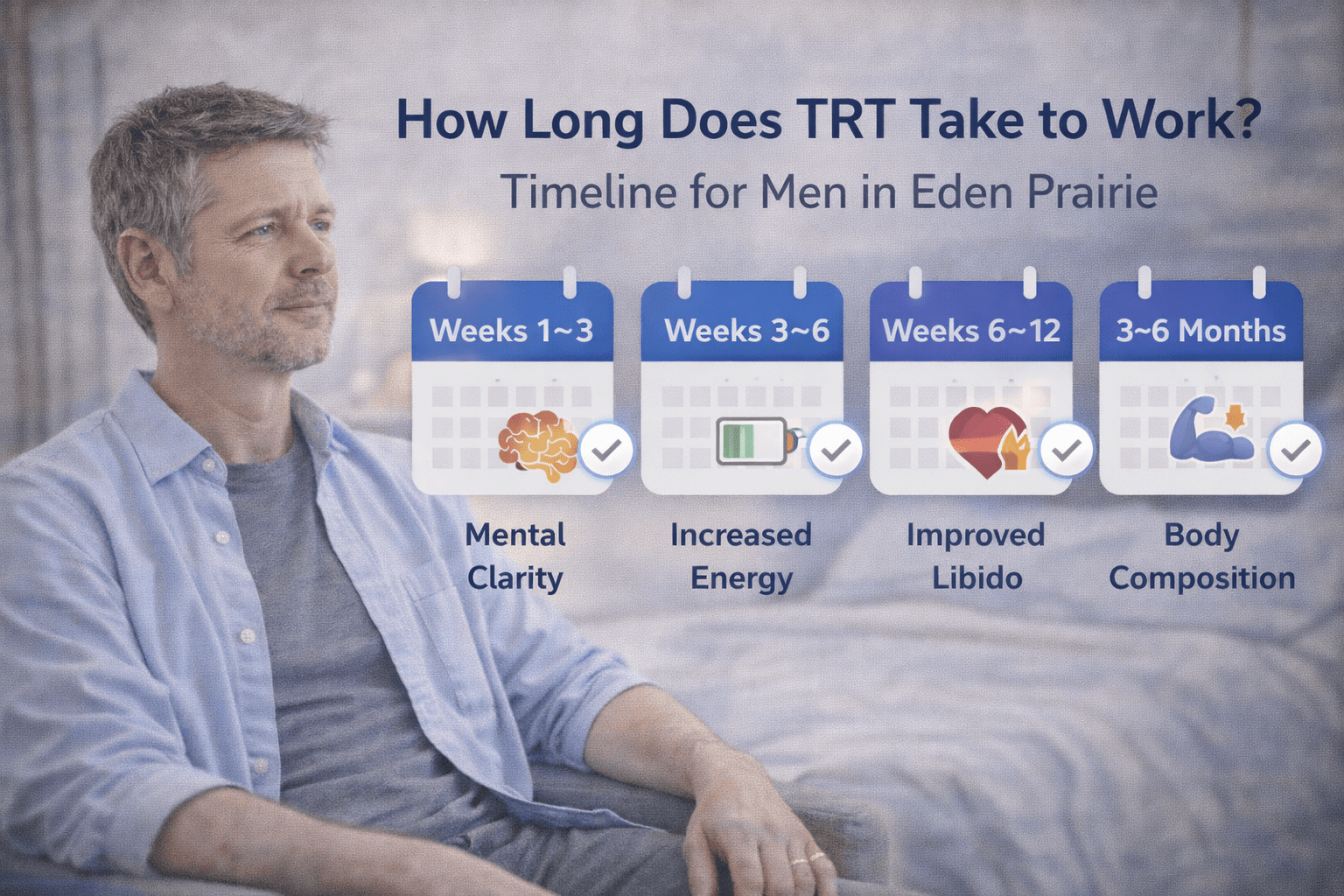
Weeks 1–3: Early Physiologic Shifts
In the first few weeks after starting TRT, blood testosterone levels begin to rise toward the target physiologic range.
During this phase, some men notice:
-
Subtle improvements in mental clarity
-
Mild increases in motivation
-
Early changes in sleep quality
However, many men notice no obvious changes yet, which is normal.
Weeks 3–6: Energy and Well-Being Begin to Improve
Between weeks three and six, testosterone’s effects on neurotransmitters and red blood cell production become more noticeable.
Men may report:
-
Improved daytime energy
-
Reduced fatigue
-
Better workout tolerance
-
Improved sense of well-being
These changes tend to be gradual and incremental.
Weeks 6–12: Libido and Sexual Symptoms
Libido and sexual symptoms often take longer to improve than energy.
Between six and twelve weeks, men may notice:
-
Increased sexual interest
-
More consistent morning erections
-
Improved sexual confidence
Sexual response depends on multiple factors, including vascular health, stress, and sleep, which is why timelines vary.
3–6 Months: Body Composition and Strength
Changes in muscle mass and fat distribution typically occur over months, not weeks.
By three to six months, some men notice:
-
Improved muscle tone
-
Reduced visceral fat
-
Better strength gains with training
These changes are most noticeable when TRT is paired with resistance exercise and adequate protein intake.
Why Expectations Matter
Men who expect immediate results are more likely to be disappointed or to make unsafe dosing decisions.
Responsible TRT emphasizes:
-
Conservative dosing
-
Allowing time for physiologic adaptation
-
Monitoring labs and symptoms together
TRT is best viewed as a long-term optimization process, not a quick fix.
What Medical Guidelines Say About TRT Timelines
The Endocrine Society notes that TRT effects occur on different timelines depending on the target tissue, with sexual function and mood improving over weeks and body composition changing over months.
🔗 https://www.endocrine.org
The American Urological Association (AUA) similarly emphasizes gradual response and the importance of monitoring rather than rapid dose escalation.
🔗 https://www.auanet.org
These guidelines reinforce the need for patience and physician oversight.
Why Dose Adjustments May Occur Early On
During the first few months, lab results and symptom response help guide adjustments.
Dose changes may occur due to:
-
Individual absorption differences
-
Symptom response
-
Hematocrit or other lab trends
Adjustments are not a sign of failure—they are a normal part of safe TRT.
Why Eden Prairie Men Are Choosing Physician-Led Care
Men in Eden Prairie often arrive after researching online TRT programs that promise rapid results.
What they’re actually looking for is:
-
Predictable progress
-
Long-term safety
-
Medical oversight
Those goals require time, monitoring, and individualized care.
How TRT Is Managed at Lite Medical
At Lite Medical, TRT begins with the Premier Discovery Intake, establishing a comprehensive baseline before therapy starts.
👉 https://litemedicalclinic.com/premier-discovery-intake/
Our approach emphasizes:
-
Conservative initiation
-
Regular lab monitoring
-
Symptom-guided adjustments
Men in Eden Prairie are seen through our local clinic:
👉 https://litemedicalclinic.com/eden-prairie/
Men in nearby Chanhassen often follow similar timelines and monitoring pathways, reflecting consistent standards across the southwest metro.
You can learn more about our men’s testosterone therapy services here:
👉 https://litemedicalclinic.com/testosterone-replacement-therapy/
And about our physician-led care philosophy here:
👉 https://litemedicalclinic.com/about/
Frequently Asked Questions
When will I feel more energy on TRT?
Many men notice energy improvements within 3–6 weeks, though timing varies.
How long until libido improves?
Libido often improves between 6–12 weeks, depending on individual factors.
Should my dose be increased if I don’t feel anything right away?
Not necessarily. TRT effects are gradual, and early dose escalation can increase risk.
Is TRT supposed to feel dramatic?
No. The goal is steady improvement, not sudden changes.
What if I don’t notice improvement after several months?
Follow-up labs and symptom review help guide safe adjustments or reassessment.
Final Thoughts from Dr. Kingsley
TRT works best when expectations match physiology.
For men in Eden Prairie, understanding the normal timeline for libido and energy improvements helps ensure TRT remains safe, effective, and sustainable over time.
Book a Consultation
If you’re considering TRT and want a physician-guided plan with realistic expectations, you can book a consultation here:
👉 https://litemedicalclinic.com/contact/
Medical & Regulatory Disclaimer
This article is for educational purposes only and does not constitute medical advice. Testosterone therapy decisions are individualized and should be made in consultation with a qualified healthcare professional.
The US FDA urges caution around unapproved or compounded hormone formulations that may be unsafe.